How Vietnam Paved The Way For De Heus’s SCF Rollout
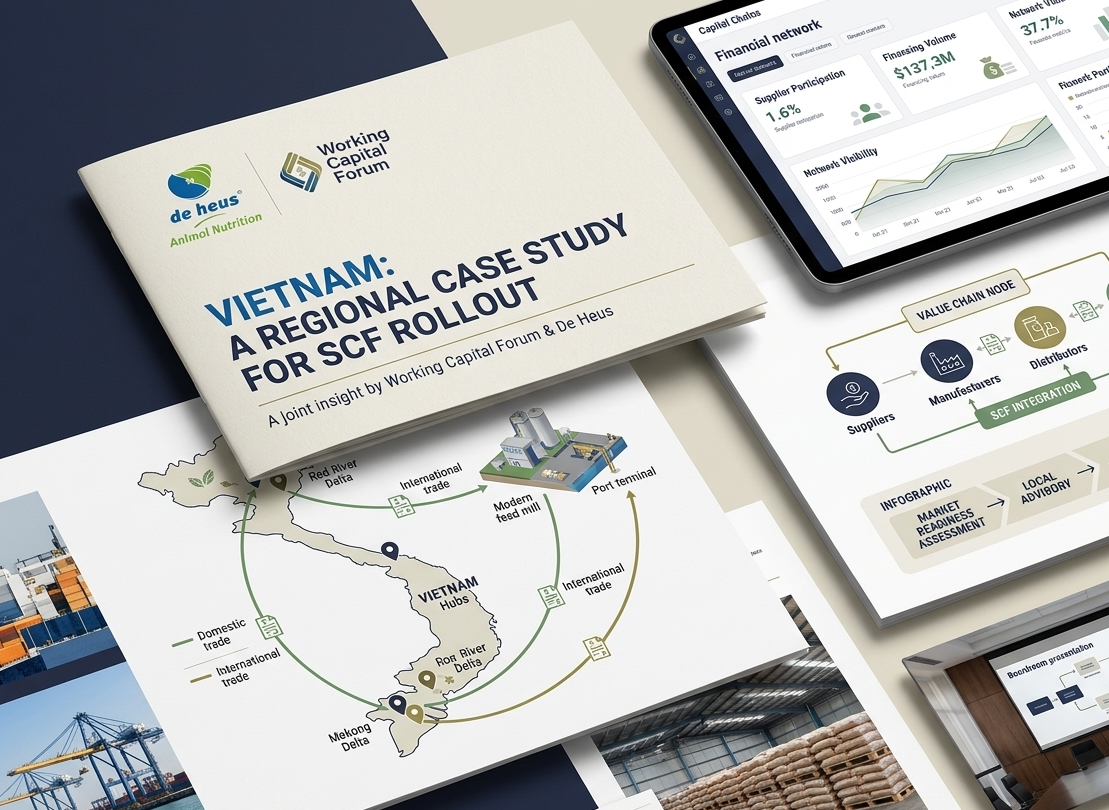
When Martijn Nijs, group treasurer of De Heus Animal Nutrition (DHAN) led the implementation of the organisation’s supply chain finance (SCF) programme, it was with a clear vision to free up liquidity that could be redeployed elsewhere in the business. But, rather than launch the programme in the organisation’s home country, De Heus took the decision to start in one of DHAN’s larger markets, Vietnam. Now, he talks to Ellie Duncan about the important lessons learned along the way.
When Martijn Nijs joined De Heus in October 2020, the Covid pandemic was still affecting operations.
“In spite of Covid, we did five acquisitions in the following 12 months which transformed the balance sheet. From net cash we went to net debt quite significantly,” he explains.
If the company wanted to continue growing, the question for Nijs was, “How can we make sure we have the liquidity to do it without bumping up leverage beyond our risk appetite?” This was when he began looking at working capital.
Before the project could get underway, Nijs had to secure buy-in from the family that owns the company and the leadership team based in Asia, as well as De Heus’s procurement team.
Engaging a consultant
One of Nijs’s first steps after getting the internal green light was to bring in Steven van der Hooft, a supply chain finance consultant, onto the project. “Working with a specialised SCF advisory firm rather than a large consultancy firm has been critical to the success of the SCF programme, ” according to Nijs, “from selecting the right supplier that fits our specific needs to operational trouble shooting during the implementation.”
“For us, having a dedicated independent adviser has worked really well because whenever we need him, he’s there. It is also about consistency,” he says. “If you have the same group of people from start to finish, it will increase the likelihood of success and speedy implementation.”
While the run up took longer than anticipated, both Nijs and van der Hooft acknowledge it has been an investment worth making to ensure the long-term success of the SCF programme as it allowed them to move forward with the support of the firm’s procurement department, a key to success for any SCF project.
“From the start it was very important to align expectations,” explains van der Hooft. “I’ve done supply chain finance projects with other clients – from the bank side and from the corporate side. Nine out of 10 times, when it fails, it’s because you haven’t set the groundwork right.”
He says that implementing supply chain finance appears simple and, technically, is not that difficult.
“It’s all the moving pieces, all of the different people and teams that you need to align that makes it much more difficult,” van der Hooft notes. “Then we had the hurdles we experienced in Vietnam.”
SCF in an emerging market
The reasons behind Nijs’ decision to initially implement the SCF programme in Vietnam are twofold. “Vietnam is one of our top markets and our people there are always willing to do new things,” Nijs says.
However, the SCF implementation was not without its challenges, as he attests: “The regulatory environment is one of the toughest in the world. It is extremely rigid and there was no fintech supply chain finance solution in the market, so we were in unknown territory, which we’re not afraid of,” Nijs explains.
“We really got the support from our partner banks,” he notes. “If you venture into uncharted territory, you need to have a partnership mindset.”
And what was in it for the banks? “We offered a partnership with a fast-growing multinational in emerging markets. It would be the stepping stone into countries like Vietnam and Indonesia, where foreign direct investment is on the rise.”
Since then, the SCF programme has rolled out in Indonesia and in Europe, working with working capital management solutions provider SAP Taulia. In every region, there were legal and tax implications to consider, particularly when implementing the international SCF programme.
“One of the reasons we chose Taulia is the fact they own the data, so they can give us insights into optimum payment terms. Globally, it gives us a consistent offering to our suppliers and the ability to link the right bank as funder in designated markets,” he says.
Van der Hooft suggests that Vietnam served as a blueprint for the wider rollout. “Technically, it was run on the same ERP system. We were using the same platform, Taulia,” he says. “That helped us speed up the process in Indonesia and subsequently, when we moved to Europe, where we’ve implemented in Poland and are implementing in the Netherlands, which should be ready this summer.”
Lessons learned
Nijs has learned that when working on any new project, you need to “Demand hard commitments on resource allocation,” especially on the IT side, which in turn ensures all parties keep to the agreed timeline.
One of the biggest lessons though has been the need to have a positive mindset. As he puts it: “You will encounter difficulties – and you need to resolve them.”
This insight references external source material. Capital Chains has added context and commentary to preserve the Supply Chain Finance perspective for future reference.